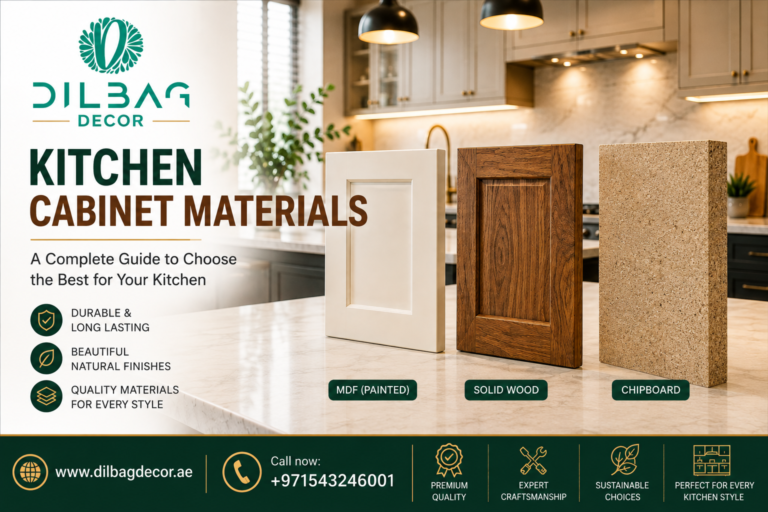
Choosing the right material for your kitchen cabinets isn’t just about looks — it directly affects how long your kitchen lasts, how much you spend on repairs down the line, and how well it holds up in Abu Dhabi’s heat and humidity. With so many options marketed as “premium” or “durable,” it’s easy to end up confused or overpaying for the wrong fit. This guide breaks down the three most common cabinet materials — MDF, solid wood, and chipboard — so you can make a confident, informed decision for your home.
What Is MDF?
MDF (Medium-Density Fibreboard) is an engineered wood product made by breaking down wood fibres and binding them together with resin and wax under heat and pressure. It’s one of the most popular materials used in custom kitchen cabinets today.
Pros:
- Smooth, uniform surface — ideal for painted and high-gloss finishes
- No wood grain, so it won’t warp or crack like natural wood
- More affordable than solid wood
- Easy to cut into detailed shapes and edges
Cons:
- Heavier than plywood or chipboard
- Can swell if exposed to standing water for long periods
- Not as strong under heavy structural load as solid wood
Best use cases: Painted cabinet doors, sleek modern kitchens, and areas where a flawless, seamless finish matters more than raw strength.
Price range: Mid-range — generally more expensive than chipboard but cheaper than solid wood.
What Is Solid Wood?
Solid wood cabinets are made from actual timber — oak, teak, walnut, or similar hardwoods — rather than manufactured board. It’s the traditional choice for homeowners who want a natural, high-end look that lasts for decades.
Pros:
- Exceptional durability and structural strength
- Can be sanded and refinished multiple times over its lifespan
- Natural grain gives a warm, authentic appearance
- Holds up well to daily wear and tear
Cons:
- Most expensive of the three materials
- Sensitive to humidity — can expand, contract, or warp if not properly treated
- Requires more maintenance to protect against moisture and pests
Best use cases: Statement kitchens, high-end villas, and cabinetry where longevity and resale value matter more than upfront cost.
Price range: Premium — the highest of the three, depending on the wood species chosen.
What Is Chipboard?
Chipboard (also called particleboard) is made from wood chips, sawdust, and shavings bonded together with resin and compressed into sheets. It’s typically the most budget-friendly option available for cabinetry.
Pros:
- Lowest cost of the three materials
- Lightweight and easy to install
- Works well when covered with laminate or veneer finishes
Cons:
- Least resistant to moisture — can swell and crumble if water gets in
- Weaker structural strength, especially for load-bearing cabinet sections
- Shorter overall lifespan compared to MDF or solid wood
Best use cases: Budget kitchen projects, rental properties, or secondary storage units where cost matters more than long-term durability.
Price range: Most affordable of the three.
Side-by-Side Comparison
| Factor | MDF | Solid Wood | Chipboard |
|---|---|---|---|
| Durability | Good | Excellent | Fair |
| Cost | Mid-range | Premium | Budget |
| Moisture Resistance | Moderate | Low (untreated) | Low |
| Appearance | Smooth, ideal for paint | Natural grain, high-end | Requires laminate/veneer cover |
| Maintenance | Low | Moderate to high | Low, but shorter lifespan |
Which Material Is Best for Abu Dhabi & UAE Homes?
This is where the comparison gets specific to where you actually live. UAE homes face a unique combination of high humidity (especially in coastal areas), intense summer heat, and air conditioning that constantly shifts indoor moisture levels. This environment is tougher on cabinet materials than it looks.
Chipboard tends to be the most vulnerable in this climate — moisture exposure near sinks or dishwashers can cause swelling within a couple of years. Solid wood, while beautiful, needs proper sealing and treatment to resist warping from humidity swings between indoor AC and outdoor heat — without that treatment, it can develop cracks or gaps over time. MDF, when properly sealed and finished, tends to strike the best balance for most UAE kitchens: it resists the day-to-day humidity fluctuations reasonably well and holds paint finishes better than the other two options.
That said, the “best” material really depends on your specific kitchen — proximity to water sources, ventilation, budget, and how long you plan to stay in the home all matter. This is exactly why a proper on-site consultation, rather than a generic recommendation, makes the biggest difference when choosing kitchen cabinet materials in the UAE.
How Dilbag Decor Helps You Choose the Right Material
At Dilbag Decor, we don’t push one material as a one-size-fits-all solution. Every home we work on in Abu Dhabi has different needs — a family kitchen used daily is a different project from a rental unit or a display kitchen in a villa.
When you come to us for kitchen cabinets in Abu Dhabi, our process starts with understanding your budget, how the kitchen will be used, and the specific conditions of your space — ventilation, sink placement, sunlight exposure, and more. From there, we recommend the material (or combination of materials) that gives you the best balance of cost, durability, and appearance, and we manufacture everything in-house so quality control stays consistent from the workshop to your home.
Whether you’re leaning toward the clean finish of MDF, the timeless durability of solid wood, or a budget-conscious chipboard build, our team will walk you through the real trade-offs — not just the sales pitch.
Ready to figure out the right material for your kitchen? Get in touch with Dilbag Decor for a free consultation, and we’ll help you build a kitchen that lasts.